
Pathologies & Solutions
Transforming Heart & Brain Interventions
Developing AI-driven robotic platforms to advance precision and expand access to care.

The future of mitral valve replacement flows differently
MITRAPILOT™ and EPYGON® are being developed to rethink transcatheter mitral valve replacement from navigation to flow, combining AI-driven robotic precision with biomimetic valve design built around native physiology.
MITRAL VALVE DISEASE
Mitral regurgitation is common.
Treatment is complex.
INTRODUCING EPYGON®
Biomimetic design for physiologic hemodynamics.
EPYGON is a biomimetic mitral valve with a unique mono-leaflet design developed to restore physiologic blood flow in the left ventricle.
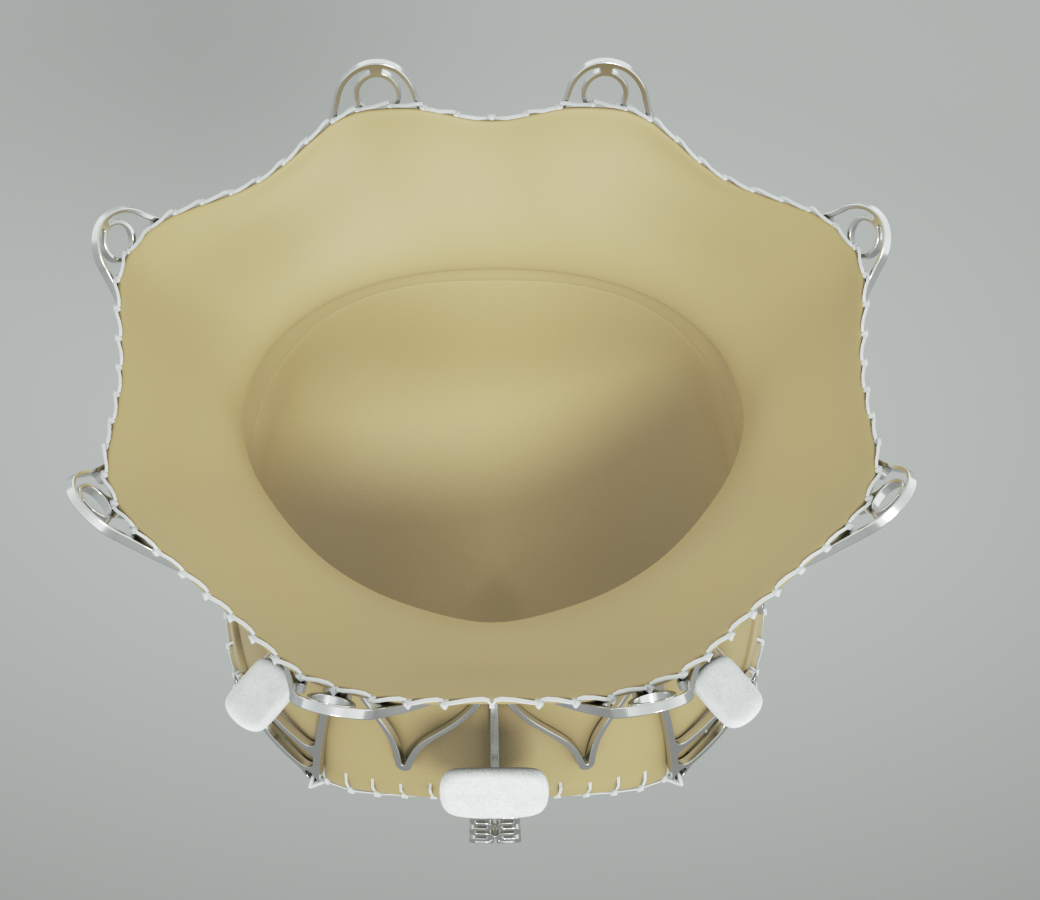
Designed to recreate the natural ventricular vortex that directs blood towards the aortic outflow tract.
Evidence supporting physiologic performance.
Published studies of EPYGON have evaluated hemodynamic performance, left ventricular flow and early clinical feasibility.

Clinical
hemodynamics
Left ventricular vortex dimension and orientation, along with physiologic anticlockwise rotation, were preserved at one year.³

First-in-human
experience
In the first-in-human case, EPYGON demonstrated trivial mitral regurgitation at one month and favorable prosthesis performance reported at six months.⁴

Patient-specific
flow analysis
In a patient-specific analysis at three months, vortex formation time was within the normal range reported in the study, and normalized left ventricular workload was 51% lower than baseline.⁵
Introducing MITRAPILOT™
AI-driven robotics for mitral valve replacement.
MITRAPILOT is being developed as an AI-driven robotic platform to support precise navigation, alignment and deployment during transcatheter mitral valve replacement.
Follow the MITRAPILOT journey.
EPYGON® is under clinical investigation and is not approved for commercial use in any geography. MITRAPILOT™ is under development and is not approved for commercial use in any geography.
References:
¹Figlioli G, et al. J Clin Med. 2025.
²Rolando M, et al. J Clin Med. 2025.
³MINERVA First-in-Human study interim analysis, study ongoing. Data on file.
⁴Salizzoni S, et al. JACC Cardiovasc Interv. 2023.
⁵Sarraf M, et al. TCT-885. J Am Coll Cardiol. 2025