
Pathologies and solutions - Carvolix

Transforming Heart & Brain Interventions

AI-guided procedural support and robotically enabled procedures for unmet clinical needs.

Heart valve disease and brain stroke

Structural heart diseases and stroke affect millions of patients worldwide and remain leading causes of mortality and disability.

Transcatheter valve therapies and thrombectomy are complex procedures that require advanced operator expertise, limiting access and consistent outcomes for patients worldwide.

Carvolix is redefining structural heart and stroke interventions through AI-guided procedural support and robotically enabled procedures.

Tavipilot Software

Aortic stenosis

Aortic stenosis is a progressive narrowing and calcification of the aortic valve that restricts blood flow from the heart to the body. 3.4% of individuals over 75 years are affected by severe aortic stenosis and require aortic valve replacement.

TAVIPILOT Software is an FDA-cleared, easy-to-use, AI-driven intraoperative software platform that tracks anatomical and device landmarks in real-time, enabling precise and accurate heart valve positioning.

It is compatible with all major cardiac imaging systems and commercially available TAVI (Transcatheter Aortic Valve Implantation) valves and integrates seamlessly into the cath lab workflow.

Our proprietary AI platform is trained on more than 5 300 TAVI patients with annotated multimodality datasets including CT, fluoroscopy, and echocardiography. This platform drives continuous algorithm development and paves the way for expansion into additional cardiovascular indications, including mitral and tricuspid valve interventions.

TAVIPILOT Software received FDA clearance on July 2025.

Detection and real-time tracking of the NCC and prosthetic valve
Precise valve placement
Deployed valve: Software-Guided Alignment View
TAVIPILOT Software is cleared for the US territory only. The product is not available in the other regions. Other projects including TAVIPILOT Robot are currently investigational.
TAVIPILOT Robot
Important safety information

PRODUCT DESCRIPTION

TAVIPILOT is an intra-operative software tool which provides real-time image guidance in addition to conventional fluoroscopy guidance for TAVI/TAVR procedures.

TAVIPILOT offers:

  • detection, tracking and marking of the non-coronary cusp (NCC)
  • detection, tracking and marking of the Virtual Lucent Line (VLL) on the Transcatheter Aortic
  • Valve (TAV) distance between NCC and the bottom of the TAV (as a percentage of the current TAV’s height)

Clinical benefits

TAVIPILOT provides accurate detection, tracking and marking of the NCC and TAV, allowing the user to clearly visualize the relevant anatomy and have guidance during the TAVI procedure. The clinician therefore benefits from an enhanced visualization of anatomical and TAVI/TAVR implant landmarks and guidance during the procedure, improving patient management.

Performance Characteristics

Detection and tracking accuracy:

Non-coronary cusp:

+/- 1 mm accuracy in 93% of all tested patients*

+/- 2 mm accuracy in 100% of all tested patients*

Prosthetic valve:

+/- 1 mm accuracy in 100% of all tested patients*

*Based on per patient median


INTENDED USE

Indications for Use

TAVIPILOT is an intra-operative software which provides real-time fluoroscopy detection, tracking and marking of the Non-Coronary Cusp and the prosthetic valve, to allow optimal guidance for precise positioning of the prosthetic valve, according to the planning phase, for TAVI/TAVR (transcatheter aortic valve implantation/replacement) procedures. The guidance provided by TAVIPILOT is not intended to substitute the cardiac surgeon’s or the interventional cardiologist’s judgment and analysis of the patient’s condition.

The device is only suitable for adults (i.e., 21 years and older).

Contra-indications:

  • Patients who have already undergone a TAVI/TAVR or SAVR (surgical aortic valve replacement)
  • Patients diagnosed with aortic insufficiency
  • Patients for whom the main access for the TAVI/TAVR catheter is not femoral
  • Patients who have a non-tricuspid native valve
  • Patients who have a permanent Pacemaker implant or temporary Pacemaker within 2 cm from the aortic root, other than the pacing guidewire
  • Patients who have thoracic surgical implants
  • Patients who are not adults

Intended Patient Population

TAVIPILOT is suitable for patients with structural heart diseases who are considered appropriate candidates for treatment with a TAVI/TAVR procedure.

The device is only suitable for adults (i.e., 21 years and older).

Intended Users

The user is a clinical specialist who is fully skilled and qualified to perform the TAVI/TAVR procedure and is responsible for sound clinical judgement and for applying the best clinical procedure, such as a cardiac/cardiothoracic surgeon or interventional cardiologist.

Before using TAVIPILOT, users must complete the required training in the safe, intended, and effective use of the device and demonstrate their ability to operate it correctly. Only after receiving certification may a user operate TAVIPILOT. Uncertified users should not have access to the device.

Intended Use Environment

TAVIPILOT is intended to be used in the control room and in the examination room of an interventional suite and/or a hybrid operating room. TAVIPILOT integrates in the existing operating room environment, usually containing an examination room (where the patient is), and a control room. The system is connected to an interventional (C-arm) X-ray system.


CARANX CONTACT INFORMATION

Contact details

Postal address: Caranx Medical, 400 Promenade des Anglais, 06200 Nice, France

Web address: www.carvolix.eu

Email: sales@carvolix.eu


WARNINGS, CAUTIONS AND NOTICES

WARNINGS

  • TAVIPILOT can only to be used by authorized and qualified

In TAVIPILOT’s context, authorized means those that are cardiac/cardiothoracic surgeons or interventional cardiologists and qualified means those trained and skilled to perform TAVI/TAVR procedures.

Caranx is not responsible for any complications resulting from the use of TAVIPILOT by unauthorized and unqualified personnel.

  • The guidance provided by TAVIPILOT is not intended to substitute the user’s judgment and analysis of the patient’s condition.
  • TAVIPILOT must be used in conjunction with other methods of assessing clinical signs and symptoms.
  • No modification of TAVIPILOT is allowed.
  • Before using TAVIPILOT, users must be trained and competent in:
    • operating TAVIPILOT,
    • in using the TAV delivery device, including guidewires and accessories,
    • in using the X-ray C-arm device and any related accessories.
  • TAVIPILOT can only be used with the following valve types manufactured by Edwards Lifesciences:
    • Edwards SAPIEN 3 Ultra RESILIA (with sizes 20 mm, 23 mm, 26 mm, 29 mm)
    • Edwards SAPIEN 3 Ultra (with sizes 20 mm, 23 mm, 26 mm)
    • Edwards SAPIEN 3 (with sizes 20 mm, 23 mm, 26 mm, 29 mm)
  • TAVIPILOT can mark a virtual lucent line (VLL) on the TAV between 0% to 50% of the current TAV’s height (where 0% is the bottom of the TAV and 50% is the middle of the TAV). The VLL is a geometric reference line illustrating a specific percentage of the current TAV’s height.
  • The VLL does not indicate the implantation depth or the final landing position of the TAV once it is fully expanded.
  • The TAV may shift during deployment and the VLL does not compensate for this movement.
  • Selecting a wrong valve type, a wrong valve size or a wrong VLL location for the patient may lead to a compromised detection and tracking of the valve implant by TAVIPILOT, which may lead to an inaccurate positioning of the valve implant.
  • TAVIPILOT can be used with approved X-ray C-arm devices with the following configurations:
    • Field of View (FOV) between 160x160mm and 300x300mm
    • C-arm acquisition frame rates of 5 to 30 frames per second
    • Minimum image resolution 512 pixels by 512 pixels, 1:1 aspect ratio

Failure to meet one of these configurations may lead to an inaccurate positioning of the valve implant due to inaccurate AI output.

  • The positioning of the X-ray C-arm needs to meet the following requirements:
    • using only 3-cusp coplanar view: any C-arm angulation allowing for visualization of the three cusps (non-coronary, right, left) in the same plane, or
    • 2-cusp overlap view: any C-arm angulation allowing for visualization of the isolated noncoronary cusp and overlapped right- and left-coronary, and
    • avoiding any parallax effect on the TAV.

Failure to meet one of these requirements may lead to an inaccurate positioning of the valve implant due to inaccurate AI output.

  • TAVIPILOT can be used with the following cleared pigtail catheters:
    • Cordis 534-550S INFINITI ® Diagnostic Catheters Ventricular Pigtail 5F/6F 110 cm
    • Cordis SR2278 SuperTorque ® Plus Angled Pigtail 5.2F 125 cm
    • Boston Scientific Impulse 5F 125cm
    • Cordis 533-650F SUPER TORQUE Diagnostic Catheters 6F 110 cm
  • The pigtail catheter must be placed in the non-coronary cusp (NCC) to ensure a more precise detection of the NCC and the VLL location.
  • Only one pigtail catheter should be used when using TAVIPILOT.
  • TAVIPILOT’s Live Tracking Confidence must not replace the user’s best judgement and reasonable caution. Even a very high confidence does not ensure absolute certainty, nor a moderate confidence level does not necessarily mean that the target is incorrect.
  • A new patient procedure must not be started until the previous guided procedure has been properly finalized in TAVIPILOT. Failure to finalize the prior procedure may result in incorrect settings being used for the new patient. (See Section 5.7 End Live Tasks)
  • All warnings, cautions, notices and contraindications that apply for other devices including valve implants, X-ray C-arms, pigtails and contrast agent devices, as described in the Instructions for Use for said devices and their supporting devices, also apply for procedures where TAVIPILOT is used.

MITRAPILOT

Mitral insufficiency

Mitral regurgitation is a heart valve disorder in which the mitral valve fails to close properly, allowing blood to flow backward during heart contraction, reducing the heart’s efficiency in pumping blood to the body. 160M patients are today affected by Mitral Regurgitation (MR) representing ~2% of the global population

MITRA-PILOT combines advanced image guidance, AI, robotics, and the proprietary EPYGON biomimetic transcatheter mitral valve to autonomously deliver prosthetic mitral valve.

Epygon is the first “physiological” transcatheter mitral valve restoring the natural blood flow vortex in the left ventricle. It fosters recovery of ventricular function, especially in fragile patients with a seriously impaired cardiac condition.

By integrating AI guidance and robotic precision with biomimetic valve design, MITRA-PILOT aims to deliver a differentiated and physiologically optimized solution for mitral valve replacement.

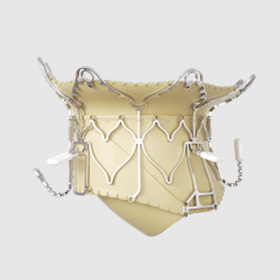
Epygon makes it possible to generate blood flow closest to normal flow inside the left ventricle, avoiding in particular the stagnation of blood inside the ventricle. Furthermore, this asymmetrical valve, lower in height on the side where the left ventricle ejects, just under the aorta valve, optimizes the ejection function. It doesn’t impede the aortic valve, as with some other devices.

Professor Christian Latremouille
Director of Surgical Business at Carmat, previously Professor of Cardiac Surgery at Georges Pompidou European Hospital in Paris, France.

This product is under clinical investigation

MITRAPILOT

ArteDrone

Stroke

Ischemic stroke occurs when a blood clot blocks an artery supplying blood to the brain, depriving brain tissue of oxygen and nutrients, which can lead to permanent neurological damage or death if not promptly treated.

11 million people worldwide experience stroke each year, making it the second leading cause of death and the first cause of acquired handicap.

Ischemic stroke is a time-sensitive emergency in which every minute of delayed treatment results in the loss of millions of neurons. Mechanical thrombectomy is the gold standard for clot removal, yet access remains limited due to the complexity of navigating the tortuous cerebral vasculature and the high level of specialized expertise required.

ARTEDRONE addresses this critical unmet need through AI-driven magnetic mini-robotic navigation designed to simplify and standardize thrombectomy procedures.

Using an autonomous magnetic guidance system and a proprietary micro-robotic catheter, the platform enables precise navigation to the clot and controlled thrombus removal.

By minimizing technical barriers and reducing reliance on highly specialized neuro-interventional skills, ARTEDRONE aims to expand access to stroke treatment and enable more centers to deliver timely, life-saving care.

Mechanical thrombectomy is by far the most efficient treatment for large vessel stroke but is currently highly underused due to the fact that it is often only performed at specialized stroke centers, which denies life-saving treatment access to millions of patients.

Professor Frédéric Clarençon
Head of the Department of Interventional Neuroradiology at Pitié Salpêtrière Hospital of Paris, FR

  • Mitral regurgitation results in blood leaking through the mitral valve each time the left ventricle contracts.
    This potentially deadly disease is highly prevalent and eventually leads to heart failure.
  • Kalios™ is the first mitral annuloplasty device that can be percutaneously adjusted to optimize valve repair at any time after implant, repeatedly, and while the heart is beating, thus avoid the need for further surgery.

  • Urinary Incontinence, a widely spread condition with over 400 million patients affected, remains a taboo in many countries, with few innovations in the field.
  • Artus is the first electro-mechanical sphincter that is adjustable for each patient need and very easy to use.
  • Artus has been designed for both women and men patients. It is implanted by a minimally invasive procedure and can be easily managed by the patients thanks to its remote control.
Caranx Medical, Caranx Inc. and Artedrone are subsidiaries of CARVOLIX